Photo Orientation

Wendy Folse with Kris Butler

Oct 24, 2005

Do you want to increase the percentage of great photos in your collection? You can by asking yourself one question every time you lift your camera for a photo: Which way should I turn the camera, horizontal or vertical?

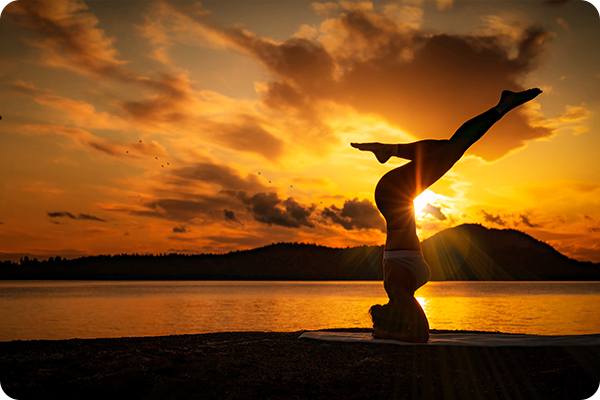
Photo by Dave Knepper of Glassboro, NJ, USA. Click photo for larger version.

Many of us as novice and family photographers rarely, if ever, turn our cameras on their sides to compose a shot in vertical format. And even those of us with more experience may not remember to consider orientation often enough. Why? There are a few potential answers worth considering here, along with helpful hints on when to choose horizontal and vertical formats.

One answer may be simply because we are used to seeing the world in a horizontal format. Another may be that we have not yet realized that one key point of composition is to match the shape of the frame to the shape of the subject. Or, perhaps it's because we just have not done it that way before. The following hints and tips should inspire you to flip your camera regularly to get some great shots you may otherwise be missing.

Choosing which format to use is a very important part of composition. When deciding on format, view the scene both ways to see which one looks better. There are also several guidelines to keep in mind when deciding which format to use. How, when and why to use each one of these guidelines is examined below. Examples are also included so you can compare to your own work.

In most cases, you will want the frame shape to match the shape of the subject and thus determine whether you want horizontal or vertical format. For instance, if shooting a skyline scene, the best choice is usually horizontal because the skyline is horizontal. On the other hand, if your subject is a skyscraper, the best choice will likely be vertical. Again, because skyscrapers are vertical.

The shape of the frame effectively isolates the subject and should compliment, not distract from, the total composition. Should this rule of thumb ever be broken? Of course, if you have a good reason; one that adds to the theme and enhances the effect of your photo.

Take a look at the first three images of the roses. In the first photo, the photographer has chosen to place a rose at the center of the frame. Why? There seems to be no artistic reason for this placement and two-thirds of the space is really wasted. The subject is a single rose and flowers with long stems are naturally vertical in shape. Therefore, a more powerful artistic choice would be to use vertical format.

Now, look at the second image of the same flower. Here the flower itself is the subject and the viewers know it immediately because the wasted space is gone. Finally, look at the last image of multiple roses. This composition works, doesn't it? Why? Because here the subject is not a single rose, but rather a group of roses in a horizontal arrangement. The repetition is carried out through all three thirds of the image and is part of the subject or theme, unlike with the single rose.

Now, consider the next three photos of the heron. Because of the placement of the bird in the frame, as well as the format, each one tells a different story. In the first one, the bird itself is the subject since the frame matches the shape of the bird. In the second photo, there seems to be no direct relationship to the shape of the bird and the photographer's choice of frame shape. The poor bird seems squashed into the frame. The only relative theme here may be to show the bird's habitat. In that case, the bird is not really the subject, the habitat is the subject.

In the third image, the bird is again the subject but the theme has changed. Is the bird ready to fly away? Has it sensed the photographer's presence? We don't know, but because of the placement in the frame we can assume that the photographer used a horizontal format and left one-third of the frame blank for a very good reason.

Learn to use frame shape as an important tool in composition. Look for examples in magazines and try to understand when and why to use different views. If you notice, magazines favor vertical format. Why? Because it cuts down on wasted space. Most often, only true landscapes will be used in the horizontal format. That is not always the case, but it is the most common. Remember to simply pay attention to the shape of the actual subject when choosing your frame orientation. Not only will your shots look better, they will start to look more professional, too.


Credits

Original article edited and republished with the permission of the author, Wendy Folse as well as Photography Composition Library.

See original article here.